One of the greatest mysteries in all of eternity is this:
Man was made in the image and likeness of God. (Genesis 1:26)
And Jesus, God in the flesh, was made in the likeness of man. Philippians 2:7 says that Jesus:
“… became human! He humbled Himself and became vulnerable, choosing to be revealed as a man…”(Passion Translation)
“… emptied Himself [without renouncing or diminishing His deity, but only temporarily giving up the outward expression of divine equality and His rightful dignity] by assuming the form of a bond-servant, and being made in the likeness of men [He became completely human but was without sin, being fully God and fully man].
(Amplified Bible)
Jesus emptied Himself! He became completely human. He laid aside His authority and power as God to live and walk this earth as a man! And as a man, Jesus needed constant communication with His Father. He needed an uninterrupted supply of God’s wisdom, guidance, strength, and power.
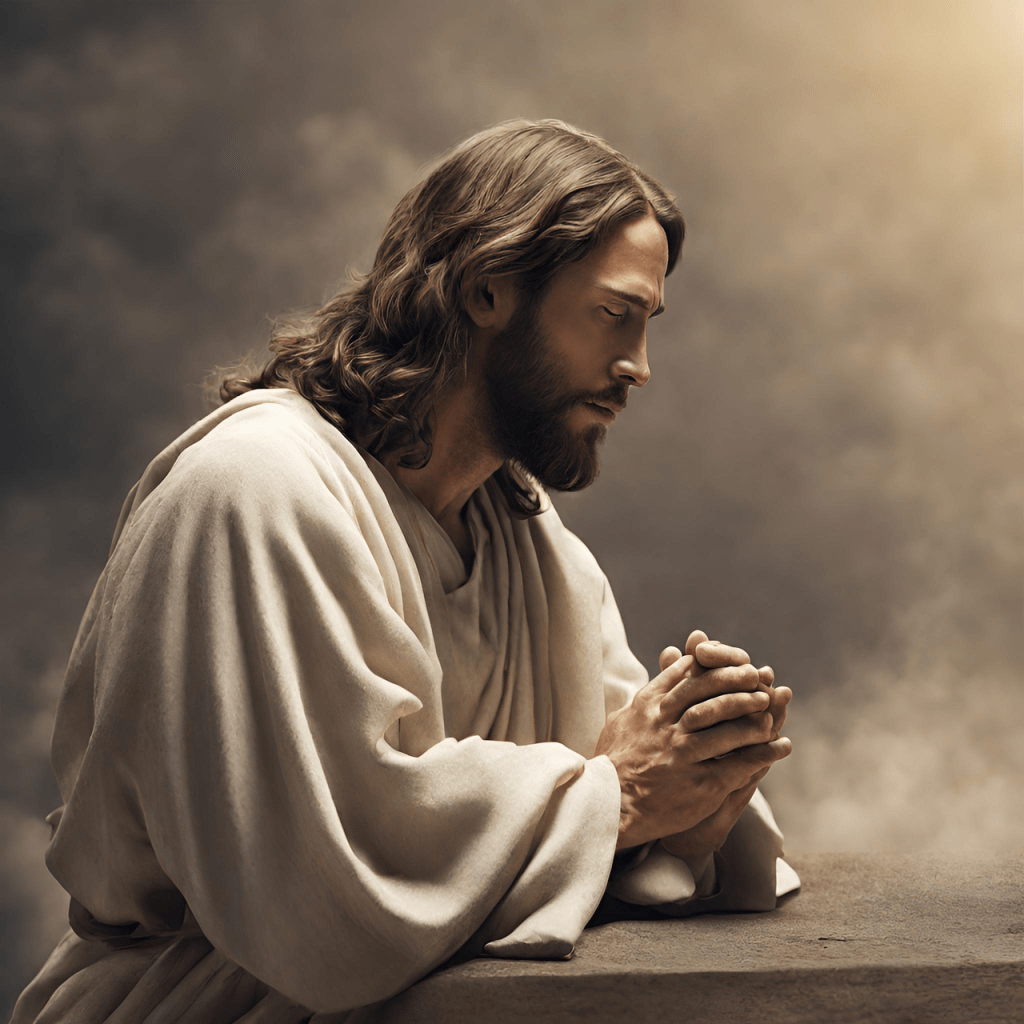
Jesus needed prayer! And He prayed… passionately, productively, and powerfully!
If Jesus needed prayer, how much more do we need prayer, prayer, and more prayer?
Knowing this need, Jesus opened the “Disciple’s School of Prayer”. In Matthew 6, He taught the disciples what is often referred to as the Lord’s Prayer.
This prayer was intended to be a model, not a mantra. But given the way it is often used today, it is more than a little ironic that this prayer was originally given by Jesus as an alternative to the rigid, repetitive prayers often recited by the religious people of His day.
Jesus said: “When you pray, there is no need to repeat empty phrases, praying like the Gentiles do, for they expect God to hear them because of their many words.” (Matthew 6:7, TPT)
In contrast, Jesus taught his disciples: “In this manner, therefore, pray…” (Matthew 6:9)
The word translated as “manner” in the verse above is the Greek word “houto“, and it means “in this way“, or “do it like this“. It’s super-easy to remember this point. Jesus knew His disciples would need to know “how-to” pray fervently, effectively, and powerfully, so He taught them “houto” pray!
One more point before we move on. The word “houto” is a demonstrative adverb. Jesus was demonstrating something His disciples had never seen before, a blueprint, a template, a pattern, a “How-To Manual, a “working model” of prayer… a Hot-Line to the very throne room of Father-God!
Prayer that connects with the heart of God is prayer that comes from the heart!
Martin Luther gave this advice to someone who asked him about prayer: “Do not mindlessly recite all the words in your prayer. Rather, let your heart be stirred and guided concerning the thoughts which ought to be comprehended in the Lord’s Prayer. These thoughts may be expressed, if your heart is rightly warmed and inclined toward prayer, in many different ways and with more words or fewer.”
Remember, this prayer was presented by Jesus as a model, not a mantra!
Let’s look at these seven essential elements of powerful prayer that were revealed by Jesus as He taught His disciples to pray:
ADORATION
“Our Father in heaven, hallowed be your name.”
Adoration means “to regard with loving admiration and devotion; to honor and worship.
The multitudes around the throne of God are not there making requests. They are wholeheartedly engaged in giving adoration and worship to the Father-God!
David, meditating on God’s goodness, told his soul to “bless His holy name!” As he did, he remembered with gratitude his covenant benefits: forgiveness, healing, rescue, favor, and blessings, revealed through God’s covenant names. (Psalm 103:1-5)
But during our prayer of adoration, we are doing much more than recalling God’s many blessings.
We are asking our Father to reveal Himself, to show His merciful and loving nature more fully, so that multitudes of people around the world would make Him the center and foundation of their lives, venerating His holy name, and giving Him the adoration and worship He so richly deserves!
CONSECRATION
“Your kingdom come, your will be done on earth as it is in heaven.”
This is a complete dedication and devotion of ourselves to God, surrendering every facet of our lives (spirit, soul, body, career, finances, family, and future) to Him.
Just as Jesus prayed in the Garden, we also pray, “Not my will, but yours…”
Beyond our own personal surrender, we pray for universal submission to the kingdom of God as it grows and spreads its influence and authority over the nations of the world.
(Revelation 11:15)
SUPPLICATION and INTERCESSION
“Give us this day our daily bread.”
This is the moment when we ask in faith for our Father to meet specific needs. Notice we ask for “our” daily bread, not “my” daily bread.
Our daily bread refers to more than just our personal needs as individuals. This is when we also pray for the needs of those all around us, our family, our church, our city, our nation, our world… give us this day OUR daily bread.
This “bread” covers the entire spectrum of human needs. It encompasses all those things necessary for life and godliness. (2 Peter 1:3)
Our DAILY BREAD includes all those “things” promised to those whose make God’s kingdom their number one priority above everything else: nutritious food, good health, a fulfilling vocation, financial success, a safe and secure home, strong marriages, children who are the Lord’s disciples, a loving family, godly government, peace with our fellow man, and above all else the freedom to worship and serve our God. (Matthew 6:33)
RESTORATION
“And forgive us our debts, as we forgive our debtors.”
This principle recognizes our redemption and restoration as a divinely negotiated prisoner swap.
We realize and embrace the truth that Jesus paid for everyone’s sin… yours, mine, and the sins of all those who have wronged us.
When we seek God’s forgiveness. We are asking Him to transfer our sins to the account of Jesus on the cross and set us free from the penalty of those sins.
But it’s not just our sins that are hung on that cross. ALL sins… not just those we have committed, but also those that have been committed against us… die a final death on the cross.
We CANNOT say, “My sins are forgiven. They are dead. They are gone. But the sins that my neighbor committed against me are still alive, because I cannot and will not forgive.”
So we ask the Father to break sin’s hold on our lives, even as we forgive and release others from the sins they have committed against us. (Ephesians 4:32)
PROTECTION
“And do not lead us into temptation, but deliver us from the evil one…”
We live in enemy territory. Even though satan’s strategic position is hopeless, he has not yet surrendered. His weapons (fear, hatred, and temptation) are still capable of wounding and overwhelming those who are ignorant of our superior weapons and our position of victory in Christ.
Because we are engaged in this ongoing warfare, we are to invited to draw upon God’s strength and do battle wearing the “whole armor of God”.
PROCLAMATION
“For yours is the kingdom and the power and the glory forever. Amen.”
Proclamation means “to declare publicly; to praise and glorify openly.”
When we proclaim our Father’s goodness and greatness, we are openly and publicly affirming His authority and power to fulfill His promises and grant our requests.
I pray you are seeing the “Lord’s Prayer” in a different light and that you are ready to apply the principles you are learning in your time of prayer with Abba-Father.
In an upcoming post, we’ll look again at the Lord’s Prayer as we utilize these principles. See you then.
************************************************
************************************************
We pray you were blessed by this teaching. If so, please let us know by “liking”, or by posting a comment below.
Also, please share this web-site with loved ones and friends! We want to touch as many people as possible with God’s love. God really does love you!
Be blessed as you pray!
 His Heart, My Home
Leave a comment